The History of Carpet: From Ancient Rugs to Wall-to-Wall Comfort
May 03, 2022 | Carpet One Floor & Home
Key Takeaways
- Carpet began thousands of years ago as hand-knotted wool rugs in Central Asia and the Middle East, and the oldest known example is about 2,400 years old.
- Power looms, tufting, and synthetic fibres turned carpet from a rare luxury into the soft, stylish, wall-to-wall floor so many families love today.
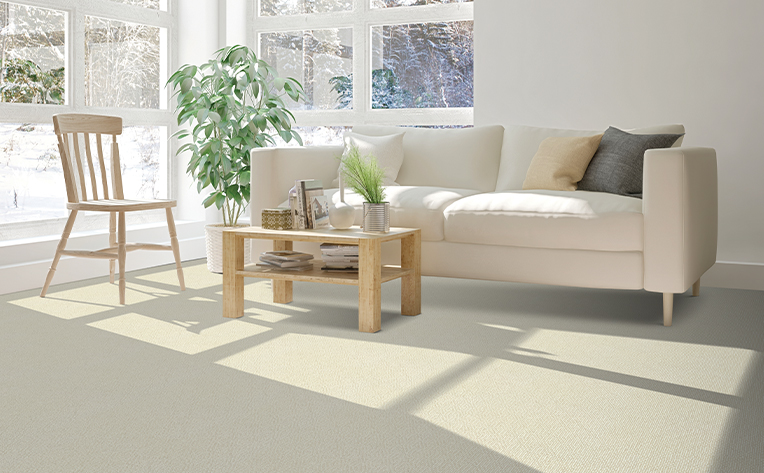
There’s something special about stepping onto soft carpet first thing in the morning. It feels warm, quiet, and comforting in a way few floors can match. That simple comfort took thousands of years to perfect, starting with wool rugs woven by hand long before anyone thought of wall-to-wall floors.
As your dedicated flooring team, we’re here to help you understand where your floors come from, so you can choose the right one with confidence. Read on to explore a brief history of carpet, from the first hand-knotted rugs to the comfortable, long-lasting styles you’ll find today.
Where Did Carpet Originate?
Carpet started as a practical solution. Nomadic people in Central Asia and the Middle East wove wool and goat hair into rugs to cover cold, hard ground. These early floor coverings kept tents warm, made sitting more comfortable, and could be rolled up and carried from place to place.
Over time, these rugs became more than tools. Weavers added bold colours, symbols, and patterns that told stories about their families and cultures. Historians believe people were weaving rugs as early as 2000 to 3000 B.C., though the exact place where carpet-making began is still unknown.
What Is the Oldest Carpet in the World?
The oldest known carpet in the world is the Pazyryk Carpet, discovered in 1949 inside a frozen burial mound in Siberia’s Altai Mountains. Sealed in ice for about 2,400 years, it survived in remarkable condition.
The Pazyryk Carpet is hand-knotted wool, with rows of deer and horsemen circling its center. Its tight, detailed knots show that skilled carpet weaving was already well developed more than 2,000 years ago. Today, you can see it at the Hermitage Museum in St. Petersburg, Russia.
How Carpet Weaving Grew in Persia and the Middle East
If one region shaped the look of carpet more than any other, it’s Persia, known today as Iran. Persian carpets were hand-crafted by families and village workshops, and the skills were passed down from one generation to the next.
Carpet weaving reached its golden age during the Safavid Dynasty in the 1500s and 1600s. Royal workshops created stunning designs filled with flowers, vines, and medallions. One of the most famous is the Ardabil Carpet, finished around 1540. Made with millions of hand-tied knots, it’s now on display at the Victoria and Albert Museum in London.
These pieces helped give rise to the term Oriental rugs, which describes hand-knotted rugs from Persia, Turkey, India, China, and nearby regions. Their patterns still inspire many of the carpet and rug designs we see in homes today.
The Spread of Carpets Into Europe
As trade routes grew, so did the love of carpet. Merchants carried Persian rugs and Turkish carpets into Europe, where they quickly became symbols of wealth and good taste. Wealthy families often displayed them on tables and walls instead of floors because they were too special to walk on.
Eventually, Europe started making its own. France and England built workshops to weave carpets locally, and towns like Axminster and Wilton in England became famous for their styles. Those names are still used to describe certain types of woven carpet today.
Did Native Americans Have Rugs?
Yes. Native American communities had their own rich weaving traditions long before carpet mills came to America. The Navajo people are especially well known for their woven textiles. They first wove blankets and clothing, and by the late 1800s, many Navajo weavers began making rugs for traders. Their bold geometric designs are still treasured as art today.
Did Carpet Exist in the 1800s?
It did, and the 1800s were a turning point. Europeans brought carpets with them when they settled in America, but the U.S. carpet industry officially began in 1791, when William Sprague opened the first woven carpet mill in Philadelphia. More mills soon followed across New England in the early 1800s.
The Power Loom Changes Everything
In 1839, inventor Erastus Bigelow built a power loom for weaving carpet, and it changed the industry almost overnight. Carpet production doubled in its first year and tripled by 1850.
In 1877, Bigelow introduced the first broadloom carpet, which was woven in wide widths. Broadloom made it possible to cover an entire room with fewer seams, opening the door for wall-to-wall carpet.
Carpet was moving from a hand-crafted cottage industry to machine-made production, and more families could finally bring it into their homes.
How Tufting Built the Modern Carpet Industry
Around 1900, a young woman named Catherine Evans Whitener in Dalton, Georgia, made a tufted bedspread inspired by one she had seen years earlier. She pushed cotton yarns through fabric and clipped the loops to create a soft, fluffy texture.
Her neighbours loved it, and soon families throughout the area were making tufted bedspreads at home. This work helped many households get through the Great Depression. In the 1930s, local inventors created machines that could tuft much faster, and before long, those machines were adapted to make carpet.
That shift earned Dalton the title of “The Carpet Capital of the World,” a name it still holds today. Most of the carpet made in the United States still comes from Dalton and the surrounding area of northwest Georgia.
When Was Carpet First Used in Homes?
Wealthy homes had rugs for centuries, but carpet became an everyday choice in the mid-1900s. After World War II, new homes were being built across the country, and families wanted floors that felt warm and inviting. Wall-to-wall carpet was the perfect fit.
The Rise of Synthetic Fibres
Until the early 1950s, cotton was almost the only fibre used in tufted carpet. That changed when textile companies introduced synthetic fibres. Nylon arrived in the late 1940s and quickly became a favourite, followed by polyester in the 1960s. Other man-made fibres, like olefin and acrylic, joined wool to give homeowners even more choices.
Continuous filament nylon yarn made carpet softer, more durable, and easier to produce on a large scale. By 1963, the carpet industry had passed the billion-dollar mark. From the shag styles of the 1970s to the plush textures of later decades, carpet became a go-to for bedrooms, family rooms, and basements.
How Is Carpet Made Today?
Today, more than 90% of carpet is tufted. Machines with hundreds of needles push yarn through a backing material, then the loops are either left as they are or cut to create a soft pile. A second backing is added for strength and stability.
Woven carpet and hand-knotted rugs are still made too, often for special designs or heirloom pieces. Each method has its own beauty, and the right one depends on your room and your style.
What Are the Four Types of Carpet?
Most carpet falls into one of four popular styles based on how the yarn is shaped:
- Cut pile: Yarn loops are cut for a soft, plush feel that’s perfect for bedrooms.
- Loop pile: Loops are left uncut for a sturdy, textured look that works well in busy spaces.
- Cut and loop: A mix of cut and looped yarn creates patterns and dimension.
- Frieze: Long, twisted fibres give a relaxed, casual texture that hides footprints.
Is Carpet Still Popular Today?
Absolutely. Flooring trends shift over the years, and you may hear people ask why carpet isn’t as popular as it once was. The truth is that carpet is still one of the most loved choices for the spaces where comfort matters most. Many homeowners pair it with other floors, choosing the right floor for the right room.
Today’s carpet is built for real life. Many styles offer stain-resistant fibres, fade and wear protection, and water-resistant backings that help with everyday spills. High-quality nylon holds up well in busy areas, while softer fibres bring a cozy feel to bedrooms and nurseries. Carpet also helps quiet noise, adds warmth underfoot, and comes in nearly endless colours, textures, and patterns.
Bring Carpet’s Rich History Into Your Home
From frozen burial mounds in Siberia to small-town Georgia, carpet has a rich history built on craft, comfort, and creativity. That same spirit lives on in every step you take on a soft, beautiful floor.
Ready to bring carpet’s rich history into your own home? Our flooring experts can help you find the right colour, fibre, and style for the way you live, and we’re happy to walk you through every option. When you’re ready to get started, don't wait to contact our team today and find your perfect carpet.